We may earn a commission if you buy through the eBay links on this page, at no extra cost to you. Specs and dates are linked to their sources under each model.
What makes a DJ turntable
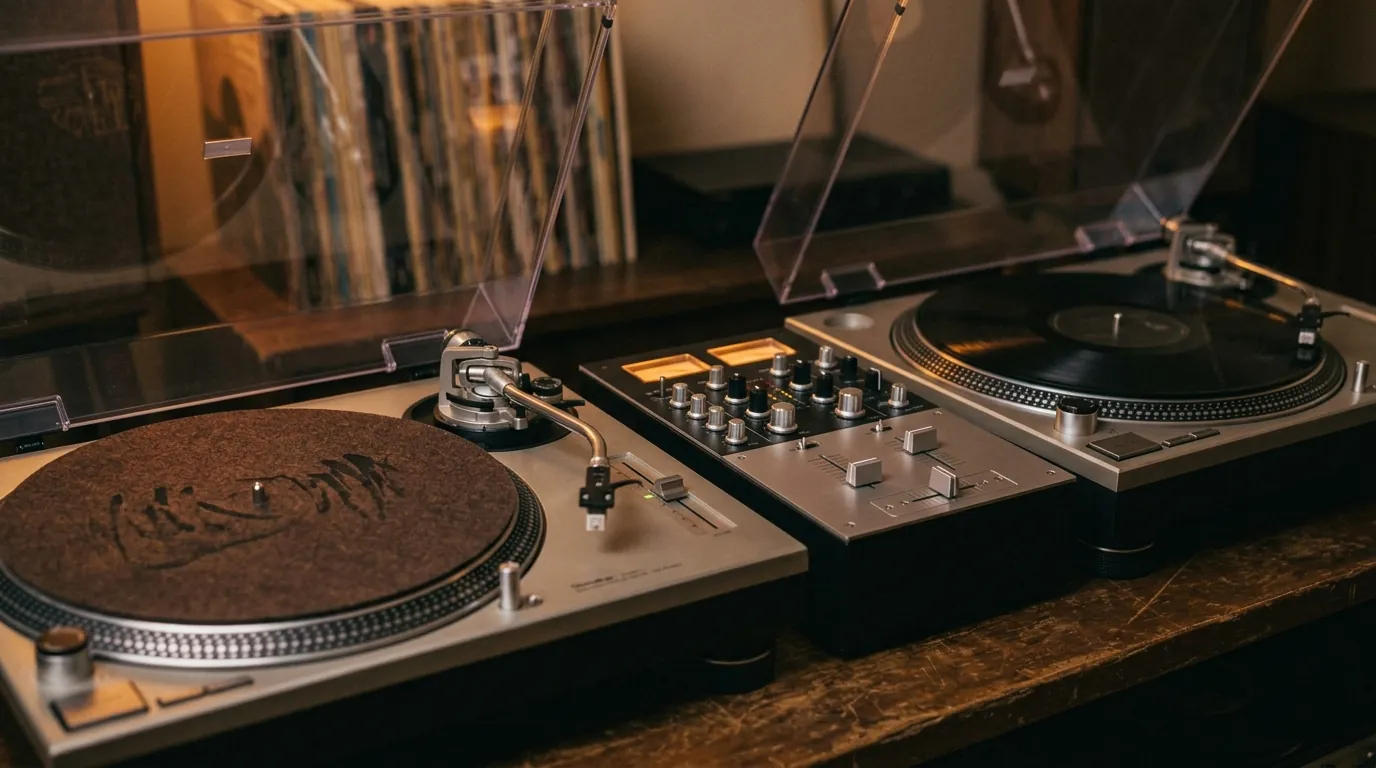
- Direct drive with real torque. The motor sits under the platter, so the deck starts fast and holds speed when you push, pull or hold the record. There's no belt to stretch.
- Pitch control you can trust. You'll ride the pitch slider constantly to beat-match. On a used deck, test the whole range for dead spots or jumps.
- A solid tonearm and a DJ cartridge. Skipping is the enemy. DJ cartridges are built to track under abuse, and the arm needs adjustable height and counterweight.
- Phono output to a mixer. Most DJ mixers take phono-level signals directly. Some DJ decks have no built-in preamp at all, which is fine as long as you're plugging into a mixer.
Checking a used DJ deck
DJ turntables work hard, so used ones get extra scrutiny. Ask the seller for a video that shows:
- Start/stop: the platter should come up to speed quickly and stop cleanly.
- The pitch slider: move it through its whole range while a record plays, listening for jumps, dead spots or crackle.
- The strobe: on Technics-style decks, the strobe dots on the platter edge should look still at zero pitch.
- The tonearm: cueing up and down, and the arm tracking without skipping.
- Both channels: sound from left and right. Worn cables and connectors are common on gigged decks.
Decks worth searching for on eBay
Technics SL-1200 / SL-1210 (MK2 and later)
The standard that club decks are measured against. The MK2 arrived in 1979, and Technics revived the line in 2016 after a pause. The black SL-1210 versions are part of the same family.
Source: Technics SL-1200 heritage
Technics SL-1200MK7
The modern DJ version of the SL-1200, unveiled at CES in January 2019. On a used one, run the same checks as any gigged deck.
Source: Panasonic press release
Pioneer DJ PLX-1000
Pioneer DJ's professional direct-drive deck, announced in July 2014, with a familiar club layout.
Source: Pioneer DJ
Audio-Technica AT-LP140XP
Audio-Technica's DJ deck. It has no built-in phono preamp, so it goes into a DJ mixer or an amp with phono inputs.
Source: Audio-Technica
Red flags in DJ listings
- No video. Photos can't show pitch problems, wobble or a noisy motor.
- "Needs a new cartridge" on a pair. Two DJ cartridges add up fast. Price them in.
- Missing dust cover or target light. These are small parts, but they can be fiddly to replace.
- Replica or "style" decks. Listings sometimes use famous model names in the title for other decks. Check the photos and the model plate.
Browse direct-drive DJ turntablesA live eBay search, filtered to record players and home turntables.eBay affiliate link
Search eBayNext steps
Use the seller question builder to ask for the right video, and read belt vs. direct drive if you're still deciding.